Welcome: SHANDONG YESMORE LOGISTICS CO.,LTD
Language:
 ∷
∷

∷
 ∷
∷


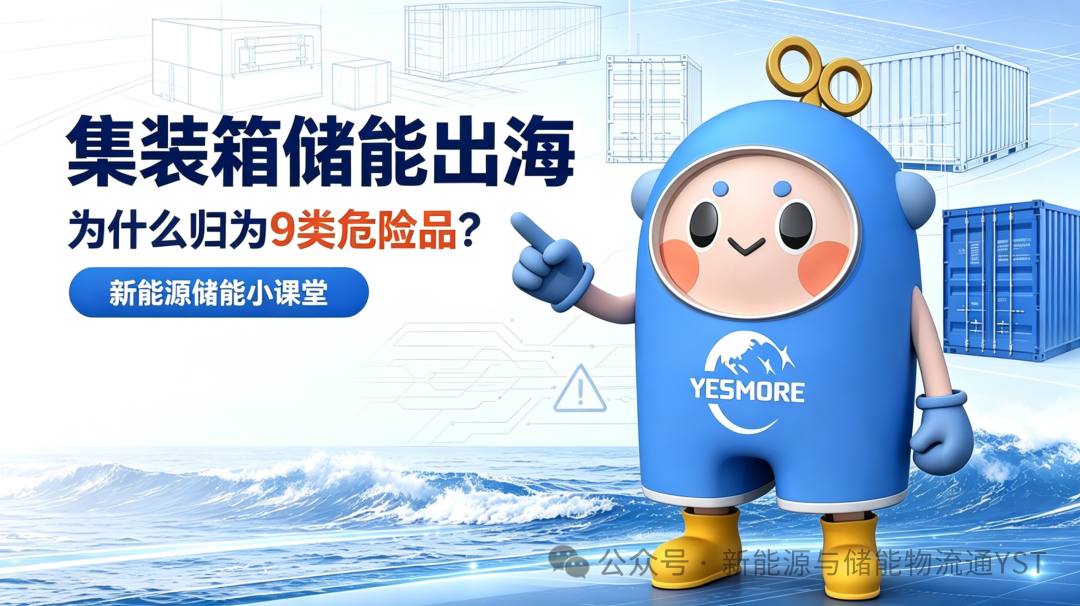
Many newcomers to the energy storage export market often wonder: energy storage containers look like ordinary metal cabinets, and the internal batteries are sealed and securely installed—so why are they classified as Class 9 dangerous goods for ocean transport?
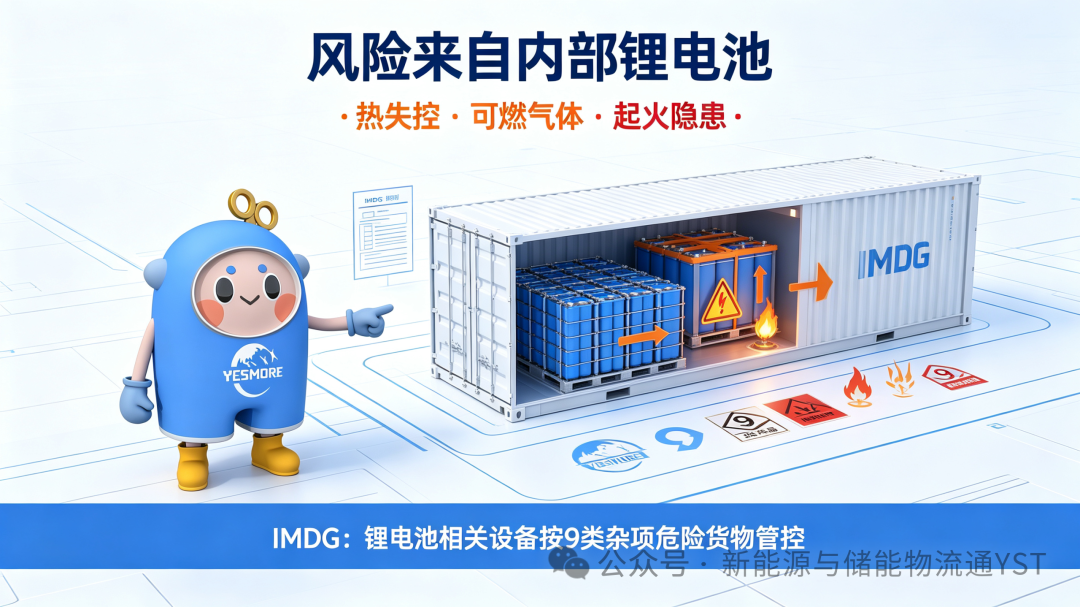
Simply put, the risk lies not in the container shell itself, but in the lithium batteries housed inside. If a lithium battery undergoes thermal runaway, it releases flammable gases and poses a fire risk. Under the International Maritime Dangerous Goods (IMDG) Code, equipment containing lithium batteries is classified as Class 9 (Miscellaneous Dangerous Goods). While these goods do not possess properties like high explosivity or strong corrosiveness, they present potential safety hazards that require specific regulatory controls.
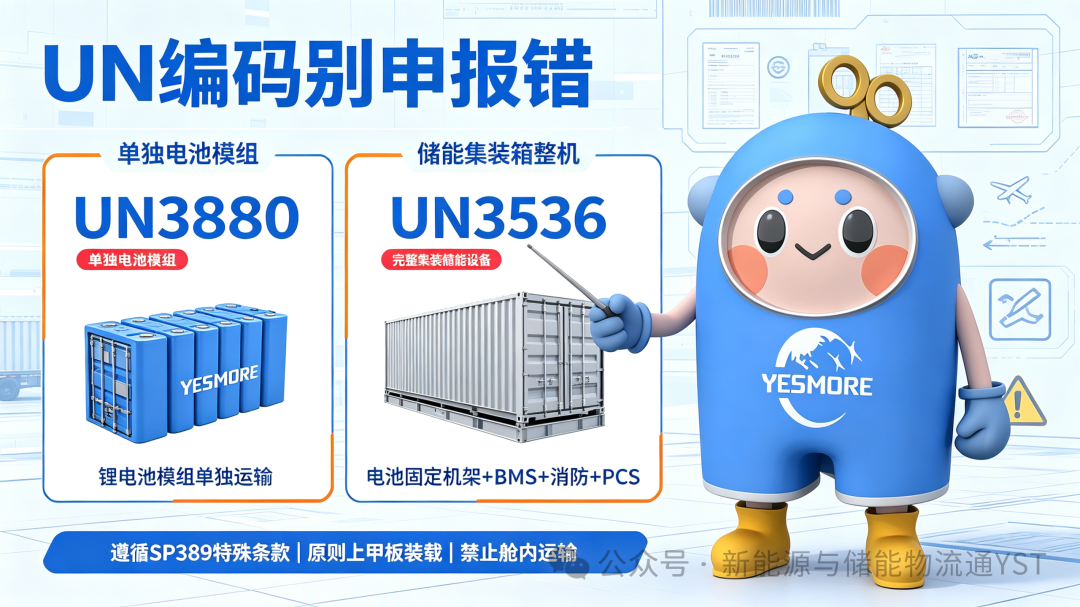
This is also where exporters most frequently make mistakes: confusing UN numbers. Many companies fail to distinguish between UN3480 and UN3536. Standalone lithium battery modules are declared under UN3480; however, fully integrated containerized energy storage units—where batteries are fixed to racks and equipped with BMS, fire suppression, and PCS systems—must be declared under UN3536. These units must also comply with Special Provision 389 (SP389), which generally mandates deck stowage and prohibits transport within the ship's hold.
An incorrect declaration code leads to immediate booking rejection by the shipping line. Upon arrival at the port, the container may be detained, incurring high demurrage charges, or in severe cases, the entire unit may be returned to the origin.
Many clients mistakenly believe that once a container has undergone factory-level securing and fire safety testing, it can be shipped as general cargo. Even if the equipment meets all performance specifications, the presence of internal lithium batteries necessitates the dangerous goods declaration process. This requires obtaining a Dangerous Goods Packaging Certificate and preparing maritime declaration documentation to ensure full compliance throughout the shipping process.
With the continuous growth of energy storage exports, regulatory compliance is the first hurdle to clear. Selecting the correct declaration code and preparing a complete set of documents are essential to mitigating risks at the port and during transit, ensuring the successful delivery of containerized energy storage equipment to overseas project sites.
Contact: Jane Wang
Phone: +8613287005502
Tel: +86 533 3595637
Email: info@zbyesmore.com jane@zbyesmore.com
Add: Shandong province,China


