Welcome: SHANDONG YESMORE LOGISTICS CO.,LTD
Language:
 ∷
∷

∷
 ∷
∷


While the Russia-Ukraine conflict continues, hostilities are concentrated along Russia's western border and within Ukraine; my country's major land crossings with Russia (such as Manzhouli, Suifenhe, Tongjiang, and Hunchun in the Far East) remain unaffected by the fighting, and customs clearance channels are operating normally. However, the ripple effects of the conflict are reshaping the logistics landscape across Russia, with distinct risk profiles emerging across different routes.
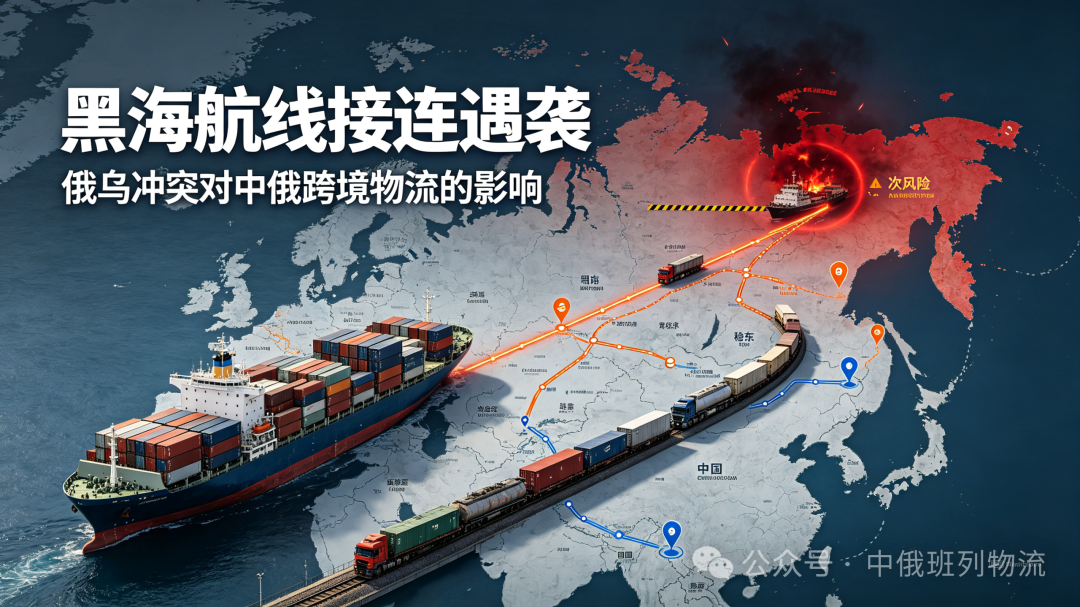
Black Sea Route: Highest Risk; Multiple Carriers Suspend Bookings to Novorossiysk
Recent frequent attacks by drones and unmanned surface vessels (USVs) on merchant ships in the Black Sea have made this the area of greatest risk. Turkey’s Akkon Lines has announced the suspension of calls at all Russian ports, while MSC has stopped accepting new orders for the port of Novorossiysk, requiring existing cargo to be diverted to other ports for transshipment.
For shipments continuing via the Black Sea, carriers are imposing steep war risk surcharges—up to $1,000 per 20-foot container. Rerouting to St. Petersburg incurs an additional cost of approximately $2,500 per container. Given the uncontrollable risks to vessels, cargo, and crew, it is not recommended that domestic shippers route new orders through the Black Sea port of Novorossiysk; for cargo already in transit, risks such as port diversion, demurrage, and return shipment should be assessed in advance.
Although the Baltic route to St. Petersburg remains viable, coastal ports there also face potential drone threats; carriers may apply discretionary risk surcharges, and schedules are subject to greater volatility compared to Far East routes.
China-Russia Far East Land and Arctic Routes: No Direct Impact from Hostilities, but Indirect Pressures Exist
Eastern border crossings—including Manzhouli, Suifenhe, Tongjiang, and Hunchun—are operating normally and remain unaffected by the direct impact of frontline hostilities. However, the conflict has spawned ongoing issues:
1. Domestic diesel supplies for long-haul routes in Russia are tight, leading to rising fuel prices; consequently, freight rates for long-haul trucking from the Far East to western cities like Moscow have increased, and transit times have lengthened.
2. Persistent labor shortages—particularly a significant lack of truck drivers in the Far East—have driven up labor costs. These issues are compounded by tight quotas for "Class C" licenses and saturated capacity on the Trans-Siberian Railway, resulting in a continued scarcity of cargo space.
3. Customs inspection standards have tightened; scrutiny of dual-use goods and certain electronic components has intensified, creating a risk of cargo seizure.
The Arctic route via Murmansk remains unaffected by the conflict at the front lines. Recently, it has achieved two-way cargo transport, gradually resolving the previous issue of outbound shipments returning with empty containers; this serves as a viable alternative for exporters of bulky goods such as machinery and auto parts.
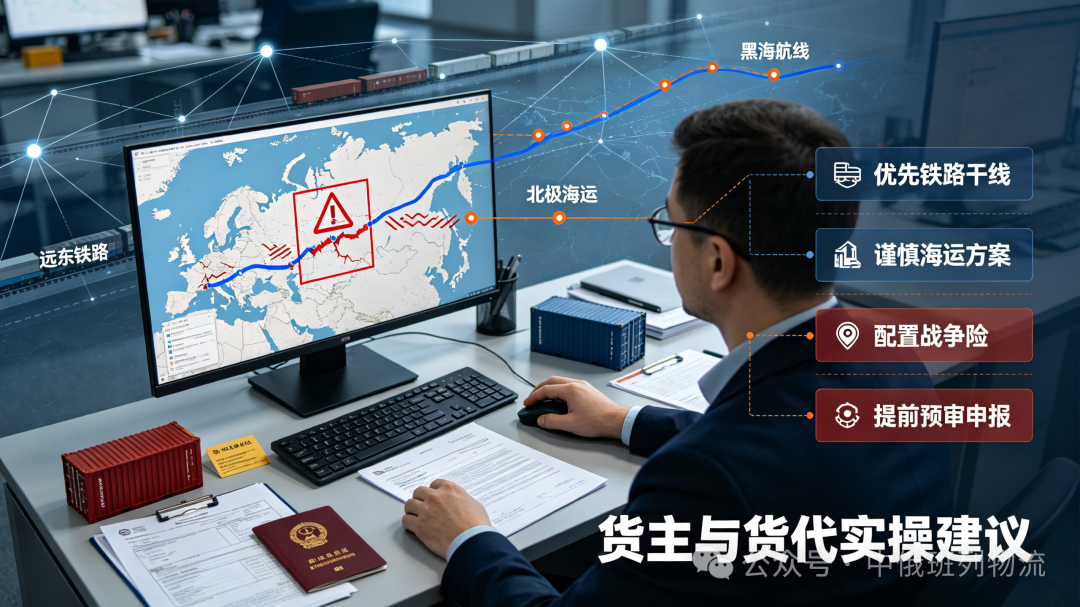
Practical Recommendations for Shippers & Freight Forwarders
1. For shipments to western Russian cities: Prioritize the China-Russia railway main line, allow a 1–3 day logistics buffer, and exercise caution when choosing long-haul road transport.
2. Sea freight options: Avoid booking new shipments via the Black Sea; prioritize the Arctic route or Far East ports instead.
3. Insurance coverage: For cargo bound for western Russia, the Baltic region, or the Black Sea, purchase separate war risk insurance, as standard cargo insurance typically does not cover losses resulting from geopolitical conflicts.
4. Declaration compliance: Pre-screen sensitive product categories and prepare a complete set of product certificates to avoid customs seizures.
While the Russia-Ukraine conflict is concentrated on the western front—leaving the main China-Russia Far East trade corridor secure—Black Sea shipping routes are now considered high-risk. Amidst geopolitical tensions, Russian logistics costs and customs regulations are subject to constant change; before shipping, always confirm the latest space availability, surcharges, and insurance terms with your freight forwarder, and prepare contingency plans to avoid unexpected losses.
Contact: Jane Wang
Phone: +8613287005502
Tel: +86 533 3595637
Email: info@zbyesmore.com jane@zbyesmore.com
Add: Shandong province,China


